
Is It Safe to Start Baby Swimming Lessons? A Parent's Guide to Safety, Qualifications and What to Expect

Updated: Nov 4
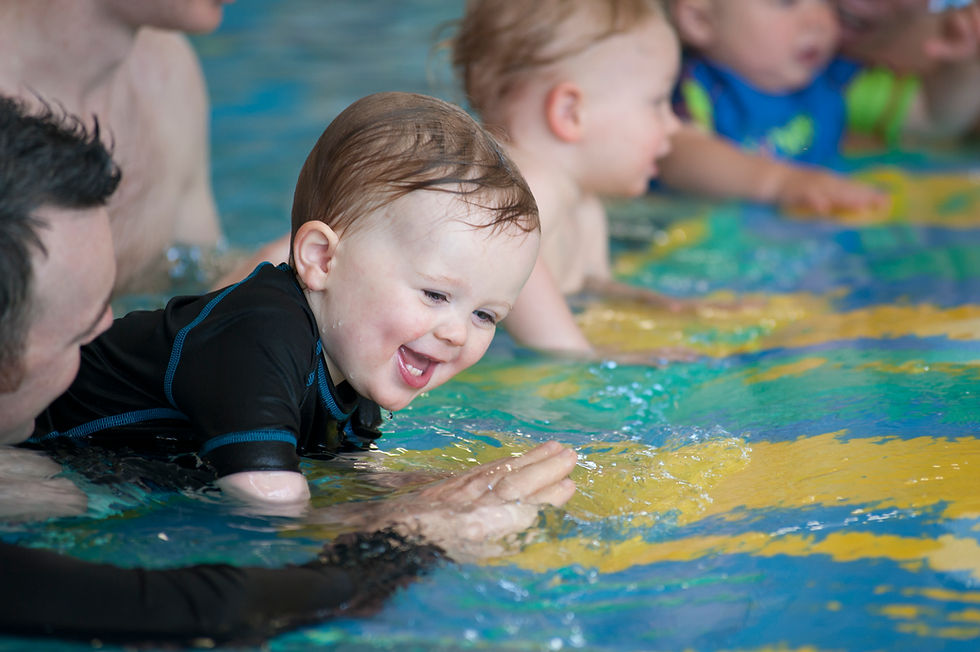
It’s one of the first questions every parent asks before booking a baby swimming class: is this actually safe for my baby? It’s a fair question, and a smart one to ask. The good news is that baby swimming lessons run by a qualified provider in a warm, clean pool can be a safe, positive experience for your little one, as long as you know what to look for.
It’s worth being upfront about something too. Swimming lessons for babies under 12 months aren’t a guarantee against drowning. No program can promise that, and any swim school that claims otherwise isn’t being honest with you. What baby swimming lessons are genuinely good for is water familiarisation, building your baby’s comfort and confidence in the water, and just as importantly, giving you the skills and awareness to keep your baby safe around water.
Here’s what to look for to make sure your baby’s lessons are safe, age-appropriate and worthwhile.
Why Water Temperature Matters for Babies
Babies can’t control their body temperature the way adults can, so warm water is one of the most important safety factors in any baby class. Pregnancy, Birth and Baby advises taking your baby out, drying them and getting them dressed if they start to shiver or show signs of being cold.
“The most important thing when introducing a baby to water is the temperature. 32 degrees is the ideal temperature. Babies can’t regulate their body temperature the way we do, so cold water, including the beach, can cause a baby to lose temperature quickly,” says Bianca Ion, owner and director of AquaBuddies.
Our Coogee pool, where all of our baby and toddler classes run, is indoor and heated to 32 degrees year round.
Pool Hygiene and Swim Nappies
A clean, well-run pool protects every baby in the water. Babies who aren’t toilet trained need a swim nappy. Swim nappies are designed to keep poo in, not to hold wee, so they should fit firmly around the legs. At AquaBuddies, swim nappies are mandatory for children who aren’t toilet trained. We recommend a disposable swim nappy with a reusable Happy Nappy over the top.
NSW Health advises that anyone who has had diarrhoea, including babies, should stay out of the pool for at least two weeks after it stops. They also recommend washing your hands with soap and water after every nappy change. AquaBuddies is a Healthy Swim accredited swim school.
Check With Your GP or Child Health Nurse
We’re swim teachers, not doctors, so this is the one area where we’ll always point you to your GP or child health nurse. It’s worth checking in before your first class if your baby:
has been unwell, has a fever or has recently had an ear infection
was born premature (we go by corrected age)
has a medical condition, or you have questions about vaccinations and swimming
If you’d like to talk something through, Pregnancy, Birth and Baby has a free helpline with maternal child health nurses on 1800 882 436.
Parent or Carer Involvement in the Water
For babies and young toddlers, you should be in the water with your child for the full lesson. This isn’t just nice to have, it’s a key safety feature. Having a parent or carer hands-on means your baby always has immediate support, and you’re learning alongside them, picking up safety cues and techniques you can use at the pool, the beach, or even bath time at home.
If a baby program doesn’t involve parents in the water, that’s worth asking more about.
Qualified Instructors
Look for a swim school where instructors hold current AUSTSWIM or Swim Australia qualifications, the national standards for swim teaching in Australia. All AquaBuddies instructors hold one of these qualifications along with current CPR and First Aid certificates.
Our founder, Bianca Ion, is an AUSTSWIM instructor and assessor specialising in Infant and Preschool Aquatics, so our lessons are built around what’s genuinely right for your baby’s stage of development.
Age-Appropriate Goals, Not Shortcuts
A safe baby swimming program will be honest about what it’s actually teaching. For infants, that’s water familiarisation skills like getting comfortable with water on the face, basic floating with support, and building confidence, not “teaching babies to swim independently.” Be wary of any program that promises more than this for very young babies. AUSTSWIM has advised against forced back floats and forced submersion in favour of gentler, developmentally appropriate approaches.
Small Classes for Real Supervision
Small class sizes matter for safety as well as learning. Our baby and toddler classes are kept small and every baby has a parent in the water, so your instructor can genuinely watch and respond to every child rather than keeping an eye on a big group from a distance.
A Sensible Approach to Floaties
It’s tempting to rely on floaties or flotation aids, but they’re not a substitute for supervision or skill-building, and they can give parents a false sense of security. That’s why we use no back bubbles at AquaBuddies. Your baby develops real body awareness and water confidence, not just the ability to float while wearing equipment.
Supervision Doesn’t Stop After Class
Beyond the lesson itself, ask about the venue’s supervision standards and emergency procedures. A school that takes safety seriously will have clear answers. At home, at the beach or at any pool, Royal Life Saving’s Keep Watch advice is simple: actively supervise young children and stay within arm’s reach whenever they’re in or around water.
What to Expect at Your First Lesson
Arrive a little early so you and your baby can settle in. You’ll be in the water together for the whole class, with your instructor guiding you through gentle, play-based activities. Tears in the first few sessions are completely normal, and our instructors are experienced in helping both babies and parents relax. Bring warm clothes and a small snack or bottle for afterwards.
Wondering if your baby is old enough to start? Our guide on when to start baby swimming lessons walks through every age stage from 4 months to 3 years.
Questions Worth Asking Before You Book
When you’re choosing a baby swimming program, it’s worth asking:
Is a parent or carer required in the water for the full lesson?
What temperature is the pool?
How is the water kept clean, and what is the swim nappy policy?
What qualifications do the instructors hold?
What exactly is the program teaching at this age: confidence and familiarisation, or something more advanced?
What are the pool’s safety and emergency procedures?
The Bottom Line
Baby swimming lessons in Sydney are generally safe when they’re run by qualified instructors in a warm, clean pool, with parents in the water, age-appropriate goals and a clear focus on safety. Think of it less as “drowning-proofing” and more as building water confidence for your baby, and water safety knowledge for you, together.
Ready to get started? Explore our baby and toddler swimming lessons at Coogee, or visit our Coogee swim school. Our team is always happy to answer questions before you book.
Frequently Asked Questions
Is baby swimming safe?
Yes, when lessons are run by qualified instructors in a warm, clean pool with a parent in the water. Baby swimming lessons build water confidence, but they don’t make a baby drowning-proof, so close supervision around water is always essential.
What water temperature is right for babies?
Babies lose heat faster than adults, so warm water matters. Our Coogee pool is heated to 32 degrees, which Bianca considers ideal for babies. If your baby starts to shiver or looks cold, take them out, dry them and warm them up.
Does my baby need to be vaccinated before swimming lessons?
It’s best to check with your GP or child health nurse, as every baby is different. Bianca’s own approach with her babies was to wait until six months, but there’s no single rule for every family.
When should my baby skip a swimming lesson?
Keep your baby home if they’re unwell, have a fever or have had diarrhoea. NSW Health advises staying out of the pool for at least two weeks after diarrhoea stops.
Does my baby need a swim nappy?
Yes. A swim nappy is mandatory for children who aren’t toilet trained. We recommend a disposable swim nappy with a reusable Happy Nappy over the top, available at our Coogee centre.
